




What is a febrile seizure?
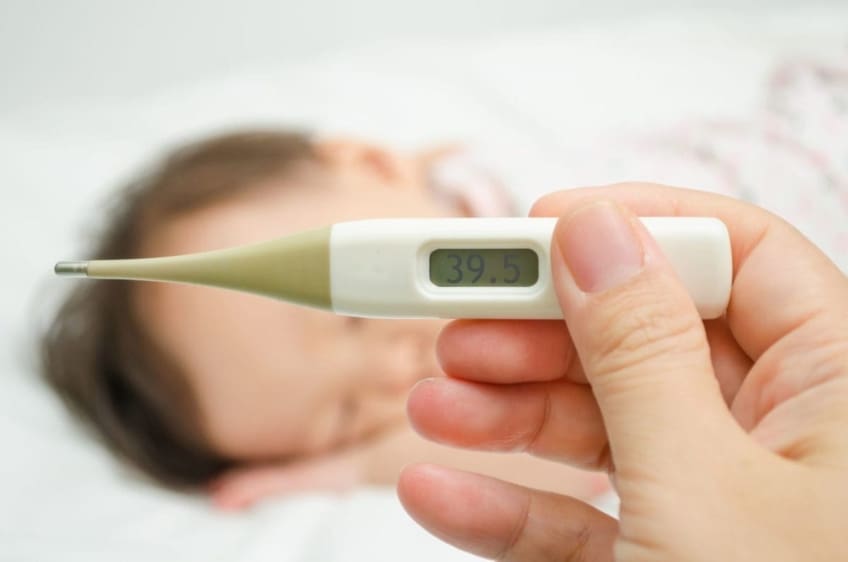
Febrile seizures or “fever seizures” look like seizures or convulsions. They occur in young children with a fever above 102°F (38.9°C). Febrile seizures can occur in children ages 6 months to 5 years but are most common in toddlers ages 12 months to 18 months.
Febrile seizures are frightening, but they aren’t as dangerous as they may appear. Febrile seizures aren’t harmful to a child. A febrile seizure doesn’t cause brain damage. Also, your child can’t swallow their tongue during a seizure (it is physically impossible for someone to swallow their tongue).
Febrile seizures usually last a few minutes. It’s very rare for a febrile seizure to last more than 5 minutes. Usually, a child who has had a febrile seizure does not need to be hospitalized. They probably don’t need X-rays or a brain wave test. Your child may only need to be seen by your family doctor so the cause of the fever can be found and treated, if needed.
If your child is younger than 3 months old and has what looks like a febrile seizure, they should been seen immediately by their doctor or in the emergency room.
Symptoms of febrile seizures
If your child has a febrile seizure, they may become unconscious and roll their eyes back. Your child’s arms and legs may become stiff or shake and twitch. Your child may also vomit. After a seizure, your child may seem drowsy and confused.
What causes febrile seizures?
Febrile seizures are triggered by fever caused by an infection. Your child is more likely to spike a high fever from a viral infection than a bacterial infection. Examples of viral infections are the flu, common cold, and roseola.
If my child has a febrile seizure, does this mean that they have epilepsy?
No. A single seizure does not mean your child has epilepsy. Even repeated febrile seizures aren’t considered epilepsy. Children outgrow the risk of having a seizure caused by fever. A child who has epilepsy usually has 2 or more seizures that aren’t caused by fever.
Febrile seizures don’t cause epilepsy. But the chance of epilepsy developing in a child who has had several febrile seizures is slightly higher than if they did not have a febrile seizure. That chance is about 2% to 4%. There is no evidence that treating your child with medicine for febrile seizures will prevent epilepsy.
How are febrile seizures diagnosed?
You should see your doctor as soon as possible after a febrile seizure. Your doctor will examine your child and ask you questions about the seizure. Your doctor also may order tests to determine what is causing your child’s fever.
Can febrile seizures be prevented or avoided?
That is unknown. Many doctors believe the risk of side effects from seizure medicines are worse than another febrile seizure. Even the medicine may not prevent another seizure.
Febrile seizure treatment
What should I do if my child has a seizure?
- Put your child on his or her side so that they won’t choke on saliva or vomit.
- Don’t put anything in your child’s mouth.
- Don’t restrain your child’s movements during the seizure. But try to clear the area so that your child can’t bump against anything that would hurt them.
- Try to remain calm. Most seizures stop on their own within a few minutes, so keep your eyes on a clock or watch.
- Call 911 if the seizure lasts more than 10 minutes or is accompanied by a stiff neck, vomiting, or breathing problems.
- Don’t try to lower your child’s fever by placing them in a cold bath, especially during a seizure.
When the seizure has stopped, call your doctor. They may want to see your child to find the cause of the fever.
Living with febrile seizures
If your child has had a febrile seizure, you may worry that they will have another. Most children will not. But the risk of another febrile seizure is slightly higher if:
- Your child is younger than 18 months.
- There’s a family history of febrile seizures.
- The fever wasn’t very high when the seizure occurred.
Questions to ask your doctor
- What caused my child’s febrile seizure?
- Will my child have another febrile seizure?
- Is there anything I can do to prevent a febrile seizure?
- Are there signs that I should look for before my child has a febrile seizure?
- Should I hold my child while they are having febrile seizure?
- Should I put a tongue depressor in my child’s mouth during the seizure?
- Is there anything I can do after a seizure to make my child more comfortable?
- Should I have my child checked for epilepsy if they have a seizure?
Resources
National Institutes of Health, MedlinePlus: Febrile Seizures—What to Ask Your Doctor

Copyright © American Academy of Family Physicians
This information provides a general overview and may not apply to everyone. Talk to your family doctor to find out if this information applies to you and to get more information on this subject.