




What is a thyroid nodule?
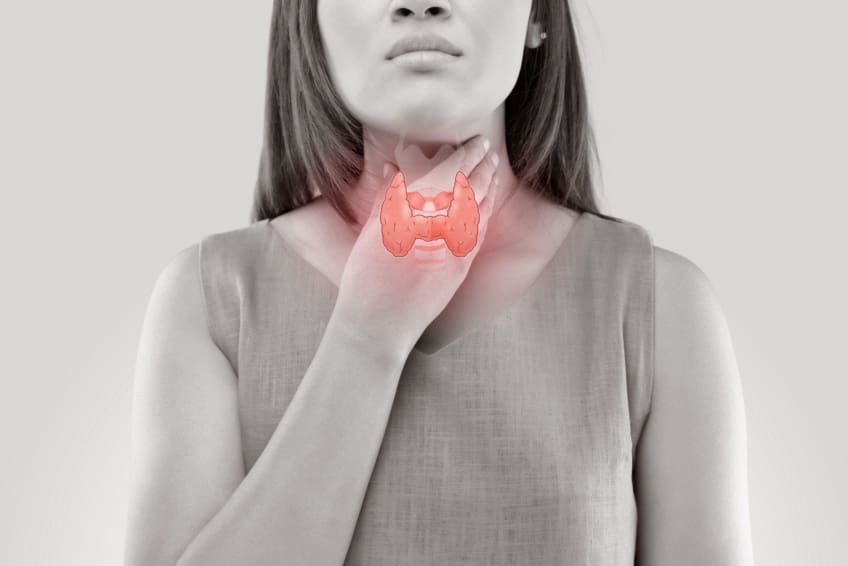
The thyroid is a small gland located at the base of your throat (near your Adam’s apple). It regulates body functions such as heart rate, metabolism, and the rate at which your body burns calories. A thyroid nodule is a lump in the thyroid gland in your neck. More than 90% of all thyroid nodules are benign (non-cancerous). Some are cysts filled with fluid.
Thyroid nodules are more common in women than in men. They also tend to run in families. They are sometimes associated with the autoimmune disorder Hashimoto’s thyroiditis. This condition is a common cause of hypothyroidism (underactive thyroid), which affects your body’s ability to maintain an efficient metabolism and burn calories.
Symptoms of thyroid nodules
Most thyroid nodules don’t cause symptoms. For people who do have symptoms, they may have trouble swallowing or breathing or have a feeling of fullness, pain, or pressure in the throat or neck. Some people might notice a lump in their neck when they look in the mirror, but this is uncommon. Some people experience rapid unintended weight loss, feelings of nervousness, or an irregular heartbeat.
What causes thyroid nodules?
Doctors aren’t always sure why some people get thyroid nodules, but they’re very common. The chances of getting one increase as you get older. Almost 50% of adults will develop thyroid nodules by the time they’re 60 years old.
The nodules are sometimes associated with other medical conditions, including:
- Iodine deficiency
- Hyperthyroidism(overactive thyroid)
- Hashimoto’s disease (hypothyroidism, or underactive thyroid)
- Cancer
How are thyroid nodules diagnosed?
Often, a doctor finds the lump during a routine checkup or during other tests. They can feel it.
How can my doctor tell if I have a thyroid nodule that is cancerous?
Your doctor can do several different tests. One test is called fine-needle aspiration. Your doctor will take a tissue sample from your thyroid gland and examine it under a microscope to see if it’s cancerous. The tissue sample is taken with a very small needle.
Another test your doctor may do is an ultrasound. This test uses sound waves to create a picture of the thyroid’s shape and the size of the nodules. It can help your doctor determine whether the nodule is a solid tumor or a cyst filled with fluid.
A third test is a thyroid scan. Your doctor will inject harmless radioactive iodine into a vein in your arm. The iodine is absorbed by your thyroid gland and makes it “glow” as your doctor takes a special picture. Your doctor can learn about the nodule depending on how much or how little of the iodine shows in the picture.
Additionally, your doctor may order a lab test (blood draw) to check your thyroid hormone levels.
Can thyroid nodules be prevented or avoided?
Doctors aren’t sure what causes most thyroid nodules, so most likely, you can’t prevent them. But you can make sure you eat enough food that contains iodine (table salt, dairy products, seafood, meat, etc.), which can prevent one cause of thyroid nodules.
Thyroid nodule treatment
Some patients who have small benign nodules may choose watchful waiting. This isn’t a form of active treatment but rather an observation period. The nodule may go away on its own or stay the same size. Patients treated this way should be checked by their doctor every 6 months to monitor the growth of the nodule. As long as the nodule does not grow, there’s usually no need to worry.
Other forms of treatment include taking hormones or radioactive iodine to shrink the nodules or injecting the nodules with ethyl alcohol (ethanol) to shrink the nodules. If a nodule is cancerous or grows despite hormone pill treatment, surgery to remove the nodule may be needed.
Living with thyroid nodules
Most people who have thyroid nodules lead a normal life. You might need to check in with your doctor more often, but there usually are no complications.
If you do have complications, they can include problems swallowing or breathing. You may also sustain significant weight gain or weight loss. Work with your doctor to treat these symptoms.
If your thyroid nodules are a symptom of thyroid cancer, you may need surgery. During the surgery, the doctor will remove most, if not all, of your thyroid. Following the surgery, you’ll take daily thyroid replacement hormones for the rest of your life.
Questions to ask your doctor
- Is my thyroid nodule cancer? If it isn’t now, does this mean that I am more prone to developing thyroid cancer?
- Will my children be more likely to get thyroid nodules?
- What is the best treatment for my thyroid nodules?
- If I have one thyroid nodule now and it goes away, will it come back?
- What can I do at home to prevent thyroid nodules?
- Do you have any educational materials I can read?
- Can you recommend any websites?

Copyright © American Academy of Family Physicians
This information provides a general overview and may not apply to everyone. Talk to your family doctor to find out if this information applies to you and to get more information on this subject.