


Sugar Substitutes

What You Need to Know

What are sugar substitutes?

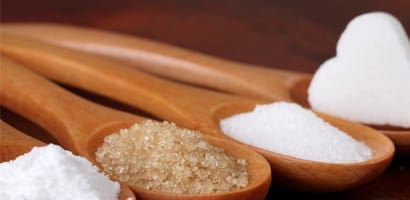
Sugar substitutes are chemical or natural substances that sweeten food and drinks without adding as many calories as sugar. Sugar substitutes are many times sweeter than sugar, so it takes less to provide the same level of sweetness. Some sugar substitutes are low in calories, while others have no calories. You may have also heard them called artificial sweeteners or non-caloric sweeteners.

Why are sugar substitutes added to food and drinks?

Sugar substitutes provide sweetness to food without the calories of sugar. This can be helpful if you are trying to control the amount of calories you eat or if you have diabetes and have to be careful about the sugar found in foods and drinks. Sugar substitutes are found in most of the “light,” “reduced calorie” or “sugar-free” foods and drinks available today.

It’s important to remember that simply eliminating sugar from your diet is not a perfect solution to your dieting needs. You should still focus on getting the majority of your calories through healthy food choices, such as fruits, vegetables, lean meats and whole grains.

What sugar substitutes are available in the United States?

The following sugar substitutes are available in the United States:

  • Aspartame, which is also known by the brand names Equal and Nutrasweet
  • Acesulfame K, which is also known as Sunett and Sweet One
  • Saccharin, which is also known as Sweet ‘N Low and Sweet Twin
  • Sucralose, which is also known as Splenda
  • Stevia, which is also known as PureVia, Truvia and SweetLeaf Sweetener
  • Sugar alcohols, which include sorbitol, xylitol and maltitol

I’ve heard that sugar substitutes can cause cancer or other health problems. Is that true?

According to the National Cancer Institute, there is no proof that sugar substitutes cause cancer. There have also been many medical research studies on the sugar substitutes that are approved for use in the United States, and they have shown the sweeteners to be safe when used in moderation.

One exception is for people who have phenylketonuria (PKU). People who have PKU cannot have the sugar substitute called aspartame because they are unable to metabolize it.

How can I tell if a food or drink contains a sugar substitute?

Check the ingredient list for the names of sugar substitutes listed above. This list gives ingredients in descending order by weight.

How much sugar substitutes should be in my diet?

Unless you add it yourself, it is often hard to know exactly how much of a sugar substitute is in a food or drink. Although sugar substitutes have fewer calories than sugar, it’s best to limit them and focus on healthy food choices, such as fruits, vegetables, lean meats and whole grains. These foods are the best sources of nutrition for your body.

I’m pregnant. Are sugar substitutes safe for me?

According to the American Academy of Pediatrics, aspartame is safe for pregnant women and their developing babies. There is also good evidence that acesulfame K, sugar alcohols and sucralose are safe for pregnant women when used in small amounts. Some doctors recommend avoiding saccharin and stevia because there isn’t enough medical research to say whether or not these sugar substitutes are safe during pregnancy.

Aspartame

What is aspartame?

Aspartame is a low-calorie sugar substitute. It is a combination of 2 amino acids, aspartic acid and phenylalanine. It is about 220 times sweeter than sugar and leaves no aftertaste when consumed. It is also known by the brand names Equal and Nutrasweet.

What is it used in?

Aspartame can be found in thousands of foods and drinks, as well as a tabletop sweetener. Some foods and drinks with aspartame include yogurt, frozen desserts, pudding, dry dessert mixes, chewing gum and soft drinks. Aspartame can also be found in some medicines, such as cough drops and vitamins.

Aspartame can extend the sweet taste of some fruit flavors, such as orange or cherry. When it is added to food with these flavors, it makes the taste last longer. For example, chewing gum made with aspartame maintains its sweet flavor longer than those made with sugar.

Aspartame should not be used as a substitute for sugar when you are baking at home. Aspartame loses its sweet taste when baked.

Who should not eat aspartame?

People who have phenylketonuria (PKU) cannot eat aspartame. This is because their bodies are unable to metabolize one of the amino acids in aspartame, phenylalanine.

Benefits of aspartame

  • Does not contribute to tooth decay
  • Does not have an aftertaste
  • Can extend the sweetness of certain flavors, making them last longer

Is aspartame safe?

Aspartame is one of the most researched sugar substitutes available in the United States, with more than 200 studies examining its safety. There has been a lot of misinformation about aspartame since it came onto the market in 1981. However, studies have concluded that it specifically does not cause headaches, seizures, Alzheimer’s disease, Parkinson’s disease, lupus or multiple sclerosis. In fact, no unsafe health consequences of aspartame have been identified.

Acesulfame K

What is Acesulfame K?

Acesulfame K, also known as acesulfame potassium, is a no-calorie sugar substitute. It is 200 times sweeter than sugar. It does not have an aftertaste and is often used in combination with other sweeteners.

Acesulfame K is also known by the brand names Sunett and Sweet One.

Benefits of Acesulfame K

  • Can be substituted for sugar when baking
  • Does not contribute to tooth decay
  • Does not have an aftertaste
  • Does not affect glucose or triglyceride levels

What is it used in?

Acesulfame K can be found in a variety of foods and drinks, including baked goods, candy, dairy products, and soft drinks, and can be used as a tabletop sweetener. It is also used in some medicines, such as cough drops, and in oral hygiene products like toothpaste and mouthwash.

Many people like to bake with acesulfame K because it does not lose its sweet taste when it is baked at high temperatures.

Is acesulfame K safe?

There have been more than 90 studies on the safety of acesulfame K, and the results have shown it to be safe for people to consume in moderation. Acesulfame K has been approved for use in the United States since 1988.

Saccharin

What is saccharin?

Saccharin is a low-calorie sugar substitute that was first discovered in 1879. In fact, it was used to sweeten foods when sugar was rationed during World War I and World War II. It is 200 to 700 times sweeter than sugar, depending on how it is used. Saccharin leaves an aftertaste some people can detect when they consume it, but that is often eliminated in prepared foods by combining it with another sweetener. Saccharin is also known by brand names such as Sweet ‘N Low and Sweet Twin.

What is it used in?

Saccharin is found in many foods and drinks, including chewing gum, canned fruit, baked goods, and soft drinks, and as a tabletop sweetener. It is also used in some medicines and vitamins. Saccharin can also be used as a substitute for sugar when you are baking.

Benefits of saccharin

  • Can be substituted for sugar when baking
  • Does not contribute to tooth decay
  • Does not affect glucose or triglyceride levels

Is saccharin safe?

You might remember that saccharin used to carry a warning label indicating that it was known to cause cancer in laboratory animals. However, after extensive research on the safety of saccharin, the United States government passed a bill in 2000 confirming its safety and removed the warning label from food and drinks made with saccharin.

Stevia Sweeteners

What is stevia?

The term “stevia” actually refers to Stevia rebaudiana, which is a South American plant in the Chrysanthemum family of plants. Only certain parts of the plant are sweet. The sweet components extracted from the leaves of the plant are called steviol glycosides. Even though “stevia” can refer to the whole plant, for this article “stevia” will refer to the sugar substitute made from the plant, since that’s how the term is commonly used. Stevia has no calories and is an all-natural sugar substitute. It is 250 to 300 times sweeter than sugar. Some people can detect an aftertaste when they consume stevia.

Stevia is also known by several brand names, including PureVia, Truvia and SweetLeaf Sweetener.

Benefits of Stevia

  • Can be substituted for sugar when for baking
  • Does not affect glucose levels
  • Comes from an all-natural source
  • Does not contribute to tooth decay

What is it used in?

Stevia can be found in many foods and drinks, such as desserts, chewing gum, baked goods, candy, and yogurt, and as a tabletop sweetener. It can also be used as a substitute for sugar when you are baking.

Is stevia safe?

Although stevia is relatively new, there have been several studies showing that it is safe for people to consume in moderation. Stevia has been approved for use in the United States as a food additive since 2008.

Sucralose

What is sucralose?

Sucralose is a no-calorie sugar substitute. Sucralose tastes like sugar but is 600 times sweeter. It leaves no aftertaste when consumed. When your body digests sucralose, very little of it is absorbed.

Sucralose is also known by the brand name Splenda.

Benefits of Sucralose

  • Can be substituted for sugar when baking
  • Does not contribute to tooth decay
  • Does not have an aftertaste
  • Does not affect glucose or triglyceride levels

What is it used in?

Sucralose is used in thousands of different kinds of foods and drinks. Some examples include soft drinks, juices, sauces, syrups, candy, desserts, baked goods and canned fruits. It is used in medicines, nutritional supplements and vitamins. It is also available as a tabletop sweetener. It is the most heat-stable of all the sugar substitutes, so it can be used in baked goods.

Is sucralose safe?

Sucralose was approved for use in the United States in 1998 and has been subjected to many studies on its safety. All studies have indicated that it is safe for people to consume in moderation.

Sugar Alcohols

What are sugar alcohols?

Despite their name, sugar alcohols aren’t sugar and they aren’t alcohol. They are naturally occurring sugar substitutes that have about half the calories of sugar. They get their name because they are carbohydrates that have a chemical structure similar to sugar and to alcohol. Sugar alcohols are also referred to as polyols.

Sugar alcohols are found in many foods, including chewing gum, ice cream, puddings, baked goods and chocolate. They may be used in place of sugar or in combination with a sugar substitute. Sugar alcohols not only add a mild sweet flavor, but they also add the same bulk and texture to foods that sugar provides.

The most common sugar alcohols found in foods include:

  • Erythritol – 0.2 calories per gram and 60% to 80% as sweet as sugar
  • Isomalt - 2 calories per gram and 45% to 65% as sweet as sugar
  • Lactitol – 2 calories per gram and 30% to 40% as sweet at sugar
  • Maltitol – 2.1 calories per gram and 90% as sweet as sugar
  • Mannitol – 1.6 calories per gram and 50% to 70% as sweet as sugar
  • Sorbitol – 2.6 calories per gram and 50% to 70% as sweet as sugar
  • Xylitol - 2.4 calories per gram and as sweet as sugar

How do I find sugar alcohols on a Nutrition Facts Label?

Sugar alcohols are easy to spot because they end in “-tol.” If a food is labeled as “sugar free,” the U.S. Food and Drug Administration (FDA) requires the specific sugar alcohol used in the food to be listed. However, if more than 1 is used in the food, the FDA requires the term “sugar alcohols” to be used.

Are sugar alcohols safe?

The FDA has determined that sugar alcohols are safe for people to consume. However, you should consume them in moderation. Sugar alcohols are slowly absorbed by your body, so eating excessive amounts of sugar alcohols can lead to bloating and diarrhea. According to the American Dietetic Association, consuming more than 50 grams of sorbitol or 20 grams of mannitol per day can cause diarrhea. The FDA requires foods and drinks that contain sorbitol or mannitol to include a warning label describing this laxative effect.

Benefits of Sugar Alcohols

  • Do not contribute to tooth decay
  • Have less of an effect on blood glucose than does sugar

How do sugar alcohols affect glucose levels?

Sugar alcohols do have an effect on blood glucose levels, but less so than sugar. If a food has fewer than 5 grams of sugar alcohol per serving, it will likely have a very small effect on your blood glucose level. However, if a food has more than 5 grams of sugar alcohol per serving, the American Diabetes Association recommends the following tips to help you determine how many carbohydrates from a serving to count in your meal plan:

  • Subtract half the grams of sugar alcohol from the total carbohydrates.
  • Use the remaining grams of carbohydrate in your meal plan.

Bibliography

This content was developed with general underwriting support from The Coca-Cola Company.

American Diabetes Association. Sugar alcohols. Accessed January 11, 2010

Position of the American Dietetic Association: Use of nutritive and nonnutritive sweeteners by American Dietetic Association (J Am Diet Assoc. 2004:104(2):255-75 )

Center for Science in the Public Interest. Food additives. Accessed January 11, 2010

Cleveland Clinic. Good nutrition during pregnancy for you and your baby. Accessed January 11, 2010

The Diabetes Institutes Foundation. Nutrition: What are sugar alcohols?. Accessed January 11, 2010

Nutrition in pregnancy by Gillen-Goldstein J, Funai EF, Roque H (Up to Date September 30, 2009)

University of Missouri Extension. What are Sugar Alcohols?. Accessed January 11, 2010

Mayo Foundation for Medical Education and Research. Artificial sweeteners: A safe alternative to sugar?. Accessed January 11, 2010

Mayo Foundation for Medical Education and Research. Phenylalanine in diet soda: Is it harmful?. Accessed January 11, 2010

National Cancer Institute. Artificial sweeteners and cancer. Accessed January 11, 2010

Mayo Foundation for Medical Education and Research. Artificial Sweeteners: Understanding these and other sugar substitutes. Accessed January 11, 2010

Diet soda intake and risk of incident metabolic syndrome and type 2 diabetes in the multi-ethnic study of atherosclerosis (MESA) by Nettleton JA, Lutsey PL, Wang Y, Lima JA, Michos ED, Jacobs DR Jr. (Diabetes Care 2009:32(4):688-94 )

WebMD. Artificial sweeteners and diabetes. Accessed January 11, 2010

Sweetener augmentation of serum triacylglycerol during a fat challenge test in humans by Singleton MJ, Heiser C, Jamesen K, Mattes RD (J Am Coll Nutr 1999;18:179-85 )

Yale-New Haven Hospital. Eat any sugar alcohol lately?. Accessed January 11, 2010

Written by familydoctor.org editorial staff

Created: 01/10