
Shingles
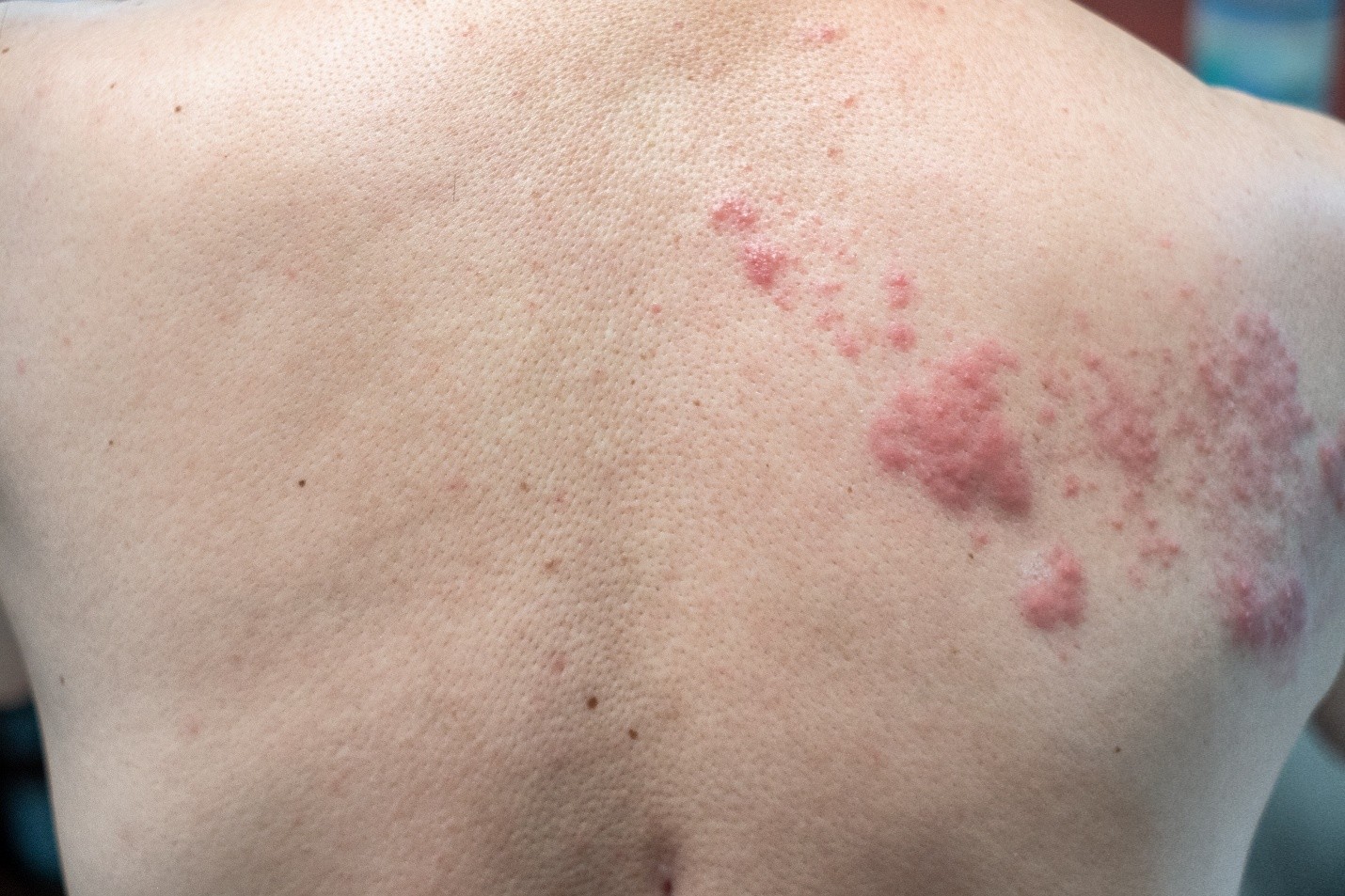
Shingles is a painful skin rash caused by the same virus that causes chickenpox. It often appears as a band of blisters on one side of the body.
 Beth Oller, MD, FAAFP
What is shingles?
Shingles is a painful skin rash caused by the varicella-zoster virus — the same virus that causes chickenpox. It is also called herpes zoster or zoster.
Nearly one-third of people in the U.S. will get shingles during their lifetime. Most people have it only once, but it can happen more than once.
Shingles is not caused by the same virus that causes oral or genital herpes (herpes simplex virus), although the viruses are in the same family.
Shingles symptoms
Shingles usually causes a painful, blistering rash. Pain, itching, or tingling may start a few days before the rash appears.
The rash:
- Starts as reddish bumps
- Turns into fluid-filled blisters in a few days
- Often appears as a band on one side of the body (chest, back, or face)
- Scabs over in about a week
- Clears up in 2–4 weeks (sometimes with changes in skin color)
Other symptoms may include:
- Fever
- Chills
- Nausea
- Diarrhea
- Headache
Post-herpetic neuralgia (PHN) is when pain lasts after the rash heals. Most people recover in 1–2 months, but PHN can last longer in some cases.
What causes shingles?
After a person has chickenpox, the varicella-zoster virus stays dormant in nerve cells. Years later, it can reactivate as shingles — often when the immune system is weaker due to age, illness, or certain medicines.
You may be more likely to get shingles if you:
- Are age 50 or older
- Have cancer
- Take medicines that weaken the immune system
- Have HIV or AIDS
Can I give shingles to others?
You cannot spread shingles itself, but the varicella-zoster virus in the blisters can cause chickenpox in someone who has never had it or hasn’t been vaccinated.
Avoid contact with:
- Anyone who has never had chickenpox
- Babies under 12 months old
- Pregnant people
- People with weakened immune systems
Stay away from these groups until all blisters have scabbed over.
How is shingles diagnosed?
Your doctor will:
- Ask about your medical history, including chickenpox
- Examine your rash
- Rarely, order a test to confirm shingles
Can shingles be prevented or avoided?
The best prevention is vaccination.
- Chickenpox vaccine for children reduces the risk of both chickenpox and shingles later in life.
- Shingles vaccine (Shingrix) is recommended for adults 50+ and for certain younger adults with weakened immune systems.
Common side effects: headache, redness, swelling, itching, or soreness at the injection site.
Shingles treatment
Starting antiviral medicine within 3 days of the rash can help shingles heal faster and reduce complications.
Common medicines include:
- Acyclovir
- Famciclovir
- Valacyclovir
Your doctor may also recommend steroid medicine to reduce pain and swelling.
Easing pain and itching
- Ask your doctor about stronger pain medicine if needed
- Take acetaminophen (Tylenol) or ibuprofen (Advil, Motrin)
- Apply anti-itch lotion (e.g., Benadryl, Caladryl)
- Use cool compresses with water and white vinegar
Living with shingles
Most people recover in 3–5 weeks without scars. Possible complications include:
Post-herpetic neuralgia (PHN):
- Long-lasting nerve pain after the rash heals
- Affects about 10% of people with shingles
- Risk increases with age
Herpes zoster ophthalmicus (HZO):
- Shingles outbreak on the face near the eye
- Can cause eye pain, swelling, light sensitivity, redness, and vision problems
- Needs immediate care from an eye doctor
Questions to ask your doctor
- Am I at risk for shingles?
- What’s the best treatment for me?
- How can I manage the pain?
- Should I get the shingles vaccine?
- Could I spread the virus to family members?
ADVERTISEMENT
ADVERTISEMENT
Explore More