

Immunization Schedules
Staying up to date with vaccines is one of the best ways to protect you and your loved ones and prevent serious disease.
 Kyle Bradford Jones, MD, FAAFP
Staying up to date on your vaccines is one of the best ways to protect yourself, your loved ones, and your community. By knowing when to get a vaccine, you can reduce your risk of getting or spreading serious diseases.
These immunization schedules show children, teens and adults when to be vaccinated. Following the right schedule ensures you or your child gets the best protection at the right time—whether it’s a routine childhood shot, a booster or a vaccine needed later in life.
The versions of these immunization schedules have been adopted by the American Academy of Family Physicians.
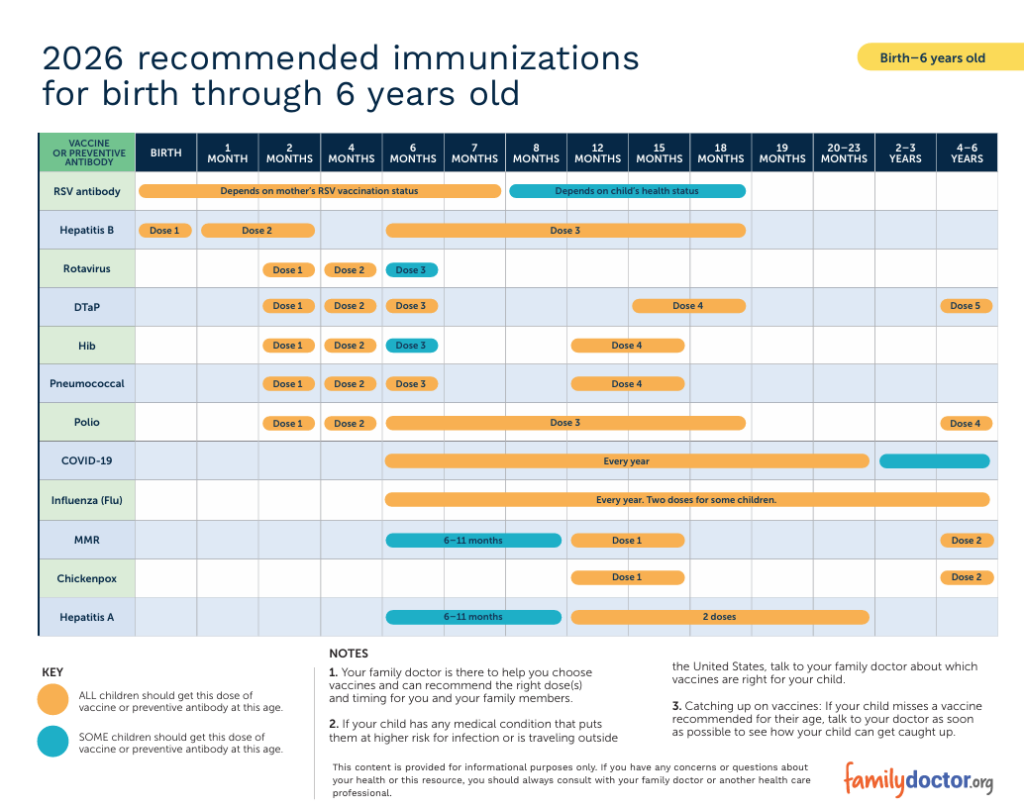
Vaccine schedule for children and adolescents (birth through 6 years)

Visit Our Interactive Symptom Checker
Choose a symptom and answer simple questions using our physician-reviewed Symptom Checker to find more information on your health issue.
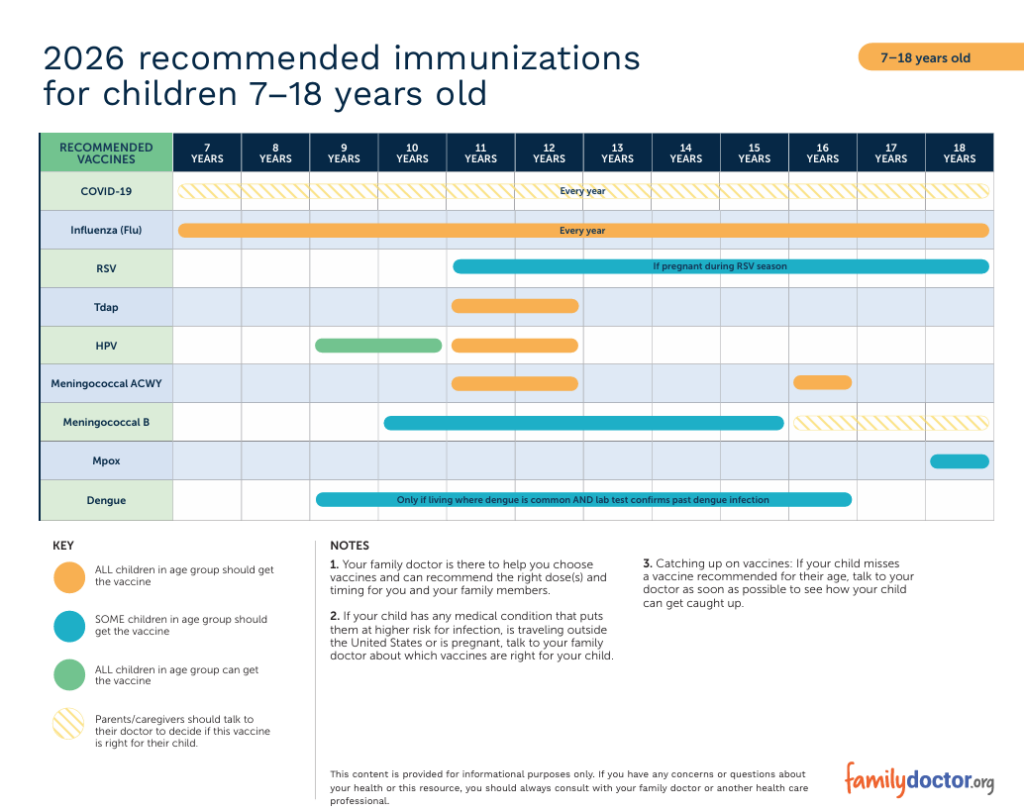
Vaccine schedule for children and adolescents (7 through 18 years)
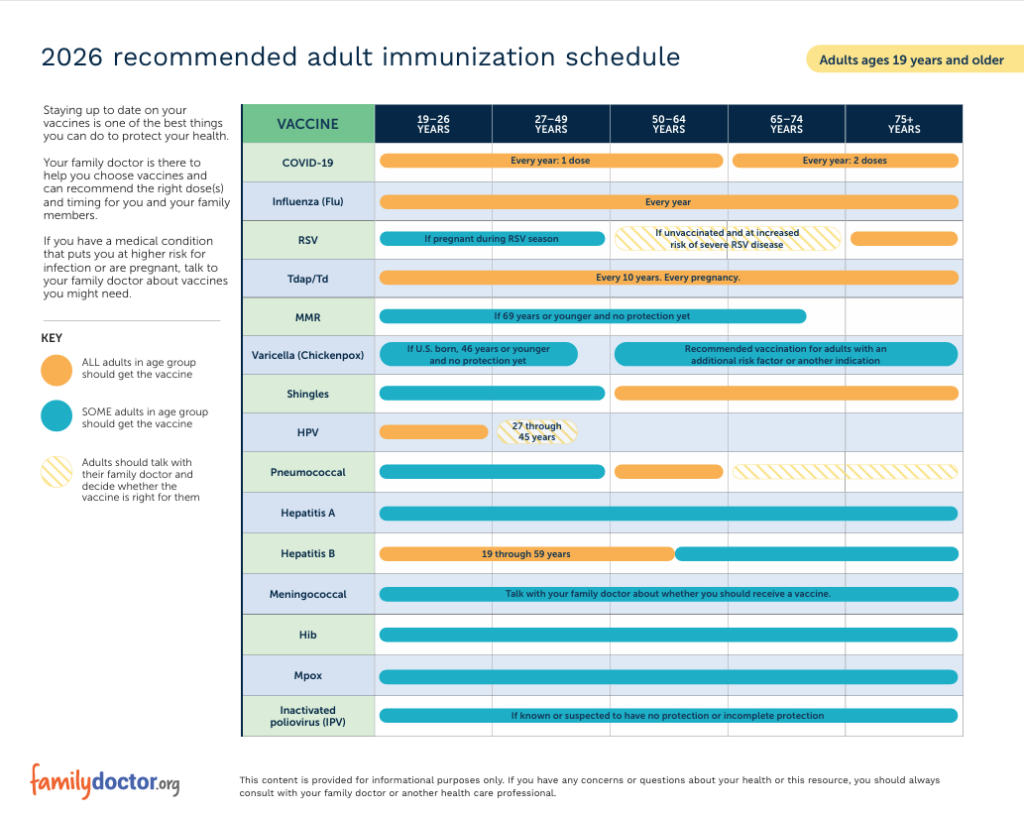
Vaccine schedule for adults
Frequently asked questions about immunization schedules
How do I know what vaccines I need?
The vaccines you need depend on things like your age, health history, job, travel plans and whether you’re pregnant. Your family doctor can review your vaccine record and help you understand what you should get now.
Where can I find my vaccine records?
Start by checking with your family doctor’s office, your pharmacy or your state immunization registry. If you still can’t find your records, your doctor can help you decide whether you need another dose or a blood test to see if you already have immunity.
What happens if I miss a dose?
Don’t panic! In many cases, you do not need to start the vaccine series over. Call your doctor’s office and ask how to get back on schedule so you can keep yourself and those around you protected.
Should I tell my doctor before getting a vaccine?
Yes. Tell your doctor if you have allergies, have had a reaction to a vaccine before, are pregnant, have a weakened immune system or are feeling sick. This helps your doctor make sure each vaccine is safe and recommended for you.
What vaccines do you only need as a child?
Some vaccines are usually given in childhood because they protect children when they are most at risk. Your doctor can help you understand which childhood vaccines are complete and whether any catch-up doses are needed.
What vaccines do you only need as an adult?
Some vaccines are recommended later in life because your risk changes as you age or because protection can fade over time. Adults may also need vaccines based on health conditions, work, travel or pregnancy.
Why do vaccine recommendations change?
Vaccine recommendations can change as doctors and scientists learn more about diseases, develop new vaccines, vaccine safety and how long protection lasts. These updates help make sure you and your family get the best protection available.
What should I do after getting a vaccine?
If you get a vaccine somewhere other than your doctor’s office, such as a pharmacy or clinic, ask whether it will be added to your vaccine record automatically. If you’re not sure, tell your doctor so they can keep your record up to date and help you know what vaccines you may need next.
Should I expect vaccine side effects?
Some side effects are normal and usually mild, such as arm soreness, redness, swelling or a low fever. These symptoms usually go away on their own in a day or two. It can help to get your shot when you know you’ll be able to rest afterward.
Are vaccines covered by insurance?
Many recommended vaccines are covered by insurance, but coverage can vary. Before your appointment, you can call your insurance company, doctor’s office or pharmacy to ask about any costs.
ADVERTISEMENT
ADVERTISEMENT
Related Articles