
Oral cancer: symptoms everyone should know
 Beth Oller, MD, FAAFP
Oral cancer symptoms don’t always stand out right away. A sore that lingers, throat pain and trouble swallowing can feel like something minor at first. The key is how long the change lasts and whether it keeps coming back.
If you notice a change in your mouth, lips or throat that lasts more than two weeks, it’s time to make an appointment with a dentist or doctor. Most symptoms have causes that are not caused by cancer but still deserve attention. Getting checked can help you get the right care sooner.
What is oral cancer?
Oral cancer is cancer that starts in the mouth or the back of the throat. It can develop on the lips, tongue, gums, lining of the cheeks, floor of the mouth, roof of the mouth, tonsils or the throat area behind the mouth. It’s more common in people over 40, but it can happen at other ages.
Oral cancer symptoms are usually not painful or dramatic, especially during early stages. That’s why regular dental visits are important: they give your dentist a chance to check for changes you may not feel yourself.
Oral cancer symptoms and warning signs
Every case of oral cancer doesn’t look the same. Some signs are visible, while others feel more like a sore throat, ear pain or trouble swallowing. Pay attention to symptoms that do not improve, including:
- Sore or lump. A sore, irritation, lump or thick patch in the mouth, lip or throat.
- Red or white patch. A red or white patch inside the mouth.
- Throat changes. A sore throat, hoarseness or feeling that something is caught in the throat.
- Swallowing trouble. Trouble with chewing, swallowing or speaking.
- Numbness or pain. Numbness, pain or bleeding in the oral cavity.
- Jaw changes. Swelling in the jaw that may make dentures fit poorly or feel uncomfortable.
Mouth sores, red patches and white patches
Mouth sores are common and usually heal, but a sore that doesn’t heal is different. If a sore, lump, thick patch, red patch or white patch lasts more than two weeks, make an appointment with a dentist or doctor. You should also get care for a sore that bleeds, keeps coming back, causes numbness or makes chewing, swallowing or speaking difficult.
Oral cancer causes and risk factors
Tobacco use is a major risk factor for oral cancer. This includes cigarettes, cigars, pipes, chewing tobacco, snuff and electronic cigarettes. Heavy alcohol use also raises risk, especially when combined with tobacco use.
Human papillomavirus (often called HPV) is also linked to many cancers in the back of the throat, and sun exposure can raise the risk of cancer on the lips. Risk also increases with age, so it’s best to speak with your doctor about your situation as the years go by.
Oral cancer screening and dental checkups
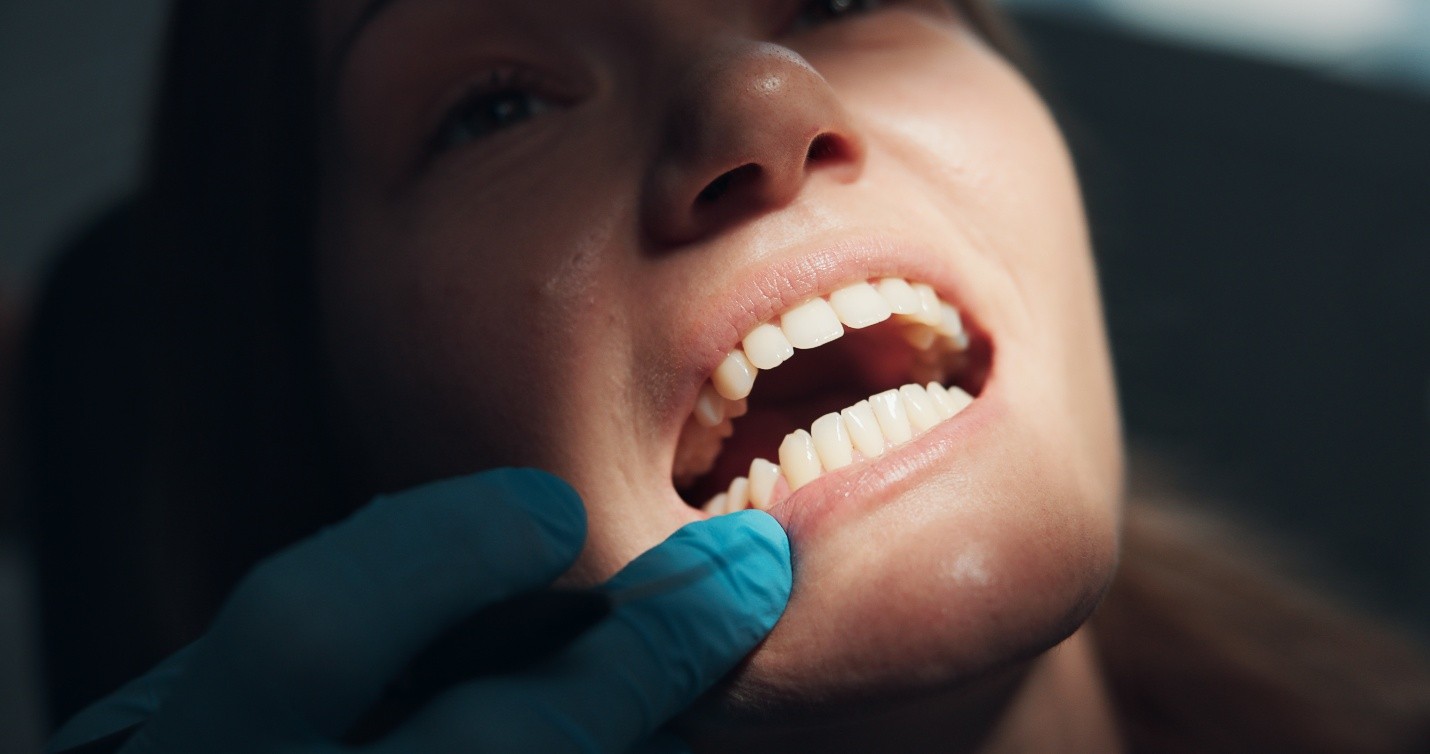
An oral cancer exam is usually quick and painless. During the exam, a dentist, dental hygienist or doctor may check your face, neck, lips, mouth and throat area for possible signs of cancer. A regular dental checkup is a good time to ask about an oral cancer exam, but if you have symptoms that worry you, don’t wait for your next scheduled checkup.
Risk reductions and oral cancer prevention
Some risk factors cannot be changed, but you can lower your risk in a few ways. Avoid tobacco in all forms, limit alcohol use and protect your lips from sun exposure. You can also ask your doctor whether the HPV vaccination is right for you or your child.
If you notice a mouth or throat change that does not go away, bring it up with your dentist or family physician. You don’t have to know if it’s serious before asking. A quick conversation can help you understand what’s happening and what to do next.
Frequently asked questions about oral cancer
What does oral cancer look like?
Oral cancer may look like a sore, lump, thick patch, or red or white patch in the mouth, on the lips or in the throat. It can also cause pain, numbness, bleeding or trouble swallowing. Any change that lasts more than two weeks should be checked.
How common is oral cancer?
Oral cancer makes up a small share of cancers diagnosed each year. It is more common in adults over 40, but it can happen at other ages. Symptoms should be checked right away because early care can improve treatment options.
What causes oral cancer?
Tobacco, heavy alcohol use and HPV are major causes or risk factors. Sun exposure can also raise the risk of oral cancer on the lips. Avoiding tobacco, limiting alcohol and keeping regular dental visits can help lower risk.
What mouth sores should concern me?
A sore that lasts more than two weeks should be checked. You should also call a doctor or dentist if it bleeds, causes pain or comes with a lump, numbness or trouble swallowing. Most sores are not cancer, but ongoing symptoms deserve attention.
When should I get checked?
See a doctor or dentist if mouth or throat symptoms last more than two weeks. Call sooner if you have bleeding, swelling, trouble swallowing or a lump in your neck. Getting checked can help find the cause and guide the next step.
ADVERTISEMENT
ADVERTISEMENT
Explore More