
Brain health at every age
 Ariel Cole, MD, FAAFP
Steps to reduce your risk of dementia
Dementia, including Alzheimer’s disease, is not an inevitable part of aging. Research shows that addressing specific lifestyle and health factors could help prevent or delay up to 45% of cases of Alzheimer’s disease and related dementias across the population.
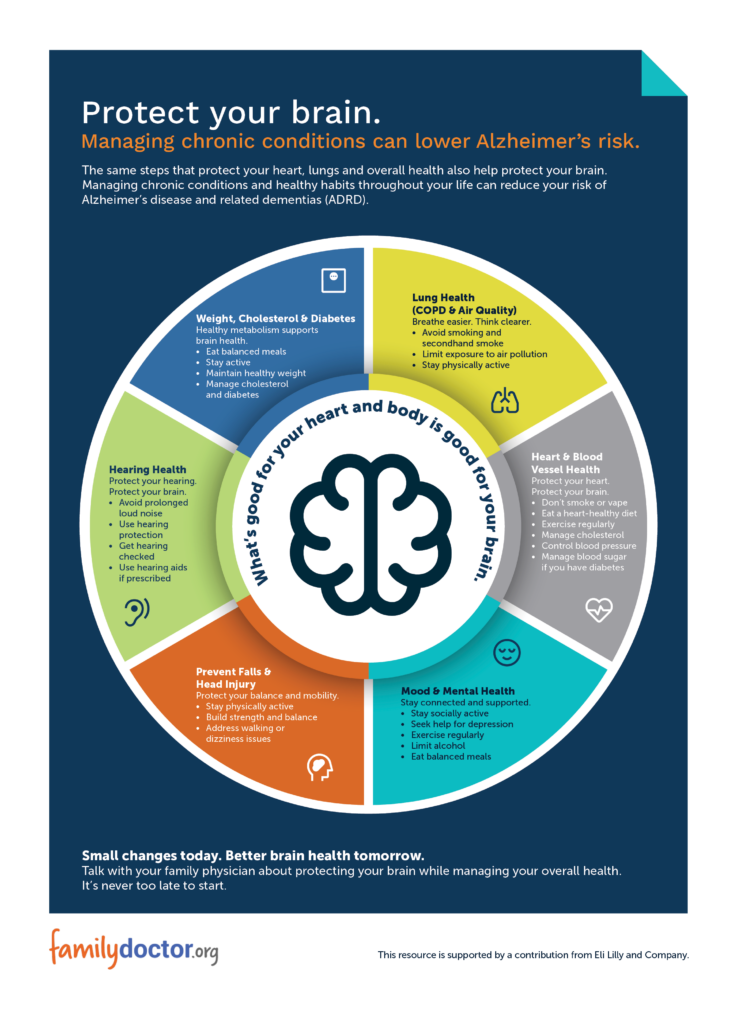
Brain health is built over decades. The earlier you start, the better. The good news: many of the same habits that protect your heart also protect your brain.
14 cognitive health risk factors
These health and lifestyle factors influence your long-term cognitive health:
- Hearing loss
- Less education / low cognitive stimulation
- Traumatic brain injury
- Physical inactivity
- High LDL (“bad”) cholesterol
- High blood pressure
- Type 2 diabetes
- Obesity
- Social isolation
- Vision loss
- Depression
- Smoking
- Excessive alcohol use
- Air pollution exposure
You cannot change your genetics, but you can change many of these factors.
Brain health by life stage
Teens and 20s: Build a strong foundation
- Protect your hearing. Avoid prolonged exposure to loud music, use noise canceling or volume limiting settings. Treat hearing loss early.
- Keep learning. Formal education helps. Challenge your brain—languages, music, technical skills—build lasting neural connections
- Prevent head injuries. Wear helmets when biking, skating or playing contact sports and take concussions seriously.
- Stay physically active. Aim for regular aerobic activity. Build strength and balance early.
30s to mid-50s: Manage stress and metabolic health
- Manage stress effectively. Chronic stress affects brain health. Remember, exercise, therapy, mindfulness and sleep matter.
- Protect you heart and metabolism. Control cholesterol and monitor blood pressure. Prevent or manage diabetes. Maintain a healthy weight. What's good for your arteries is good for your brain.
- Stay socially connected. Regular conversations with friends and family make a difference. Isolation increases dementia risk.
- Challenge your mind. Read, take classes and learn new skills. Engage in complex hobbies.
Late-50s to mid-60s: Protect your senses and habits
- Monitor hearing and vision. Untreated hearing and vision loss increase dementia risk. Use hearing aids or corrective lenses when needed.
- Keep eating healthy. Emphasize vegetables, whole grains and lean proteins in your diet. Limit saturated fats and processed foods.
- Stay mentally active. Continued learning strengthens cognitive reserve. Read books, do puzzles and engage in classes or discussion groups.
Age 65 and older: Stay engaged and independent
- Stay socially involved. Consider clubs, faith groups, volunteering and new hobbies. Withdrawal from activities can signal trouble.
- Maintain access to healthy food. Ask for help if grocery shopping or cooking becomes difficult.
- Protect mobility and balance. Address walking problems early and protect yourself from falls and head injuries.
- Monitor changes in thinking. Report concerns early. Talk to your doctor about memory, problem-solving or language changes.
At every age: Core brain-healthy habits
- Take prescribed medications for blood pressure, cholesterol and diabetes consistently.
- Avoid tobacco.
- Limit alcohol.
- Seek help for depression.
- Stay physically active.
- Reduce exposure to secondhand smoke and polluted air when possible.
Consistency matters more than intensity.
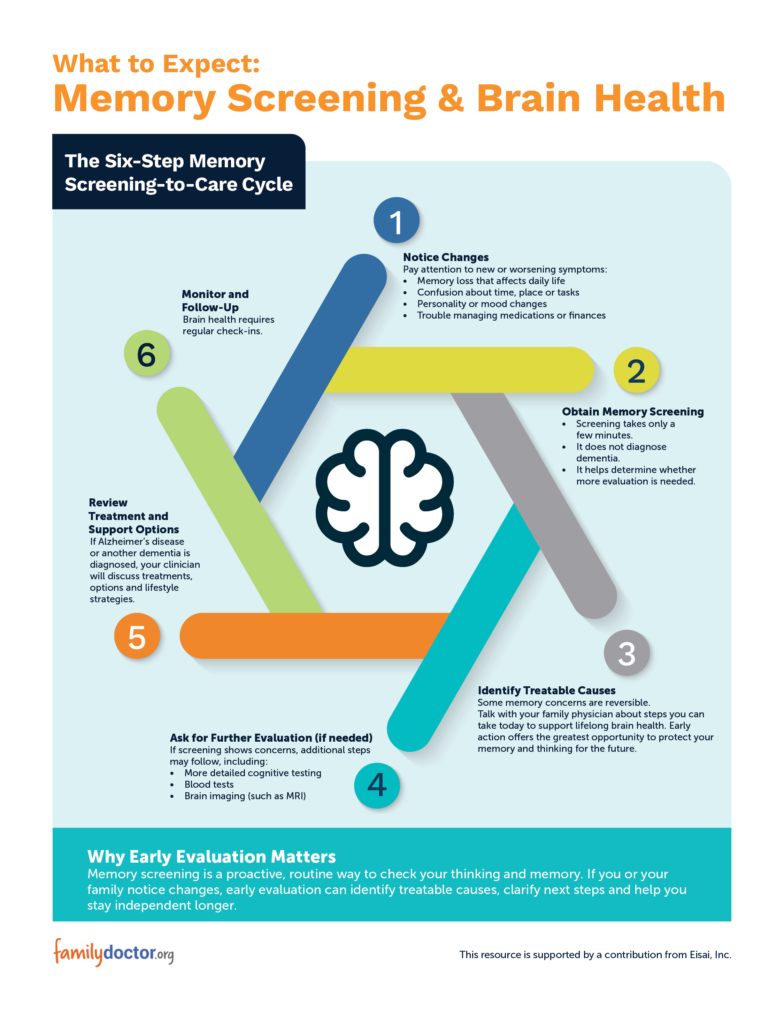
Cognitive Screening
Cognitive assessment is part of the Medicare Annual Wellness Visit. These are not tests to “pass or fail.” They help identify concerns early. If concerns are identified:
- Some causes of memory problems are treatable.
- Early action can help you remain independent longer.
- Medications and lifestyle changes may slow progression in certain cases.
- Your physician can guide next steps, including referrals and treatment options.
The Bottom Line
Brain health is cumulative. Small, consistent decisions—starting early and continuing through life—meaningfully reduce risk. Protect your heart. Protect your senses. Stay connected. Keep learning. Move your body. Your brain depends on it.
Questions to ask your doctor
GENERAL
What should I be doing at this age for my brain health?
How do I reduce my risk of having issues with my brain health now? In the future?
Is it ever too late to make changes that will improve my brain health?
What are the best ways to handle stress to support my brain health?
As a caregiver for someone with a decline in brain health, what are some things I need to be thinking about to be supportive?
WHEN THERE'S A CONCERN
Should I be concerned if I’m having difficulty finding the words that I want to use, difficulty remembering things or experiencing any issues with thinking or memory? Is there testing or treatment that we could do to help?
If I have a family history of cognitive issues, what can I do? Can you diagnose issues early with testing? What’s the likelihood that I will also have cognitive issues if my parent has been diagnosed?
What is causing my decline in brain functioning - what's the diagnosis? If my diagnosis isn't related to Alzheimer's or dementia, what does that mean?
What can I do on my own, without medications, to support my overall brain health?
ADVERTISEMENT
ADVERTISEMENT
Related Articles