

What I tell my patients about measles

Measles is no small deal. Before vaccines were widespread, measles was a common childhood illness. But unlike other common infections like the flu or a cold, measles isn’t mild. Long-term consequences of getting measles are very real.
That’s why, as a family physician and expert on immunizations and public health, I’m worried about the resurgence of measles in our communities. In every year since 2023, we have sequentially had exponentially increasing cases of measles and multiple outbreaks across the United States.
Last year, Texas was in the news with a large measles outbreak that involved hundreds of cases. And right now, it’s South Carolina that's made headlines with another outbreak, rapidly approaching 1000 cases. Overall, it looks like 2026 is on pace right now to easily surpass the more than 2000 United States measles cases diagnosed in 2025.
While this is a growing health hazard, the good news is that there are clear steps you can take to protect yourself, your family and your community from measles.
Why measles is serious
Measles is more serious than other viral diseases because of two unique features: its severity and its ability to spread very easily.
An acute case of measles usually begins with fever, cough, runny nose, and conjunctivitis, symptoms similar to other respiratory illnesses. The classic red rash begins on the forehead and moves down over the body a few days later. But measles can also result in a variety of more serious, long-term complications. Measles can cause life-threatening pneumonia and can damage your immune system’s ability to fight off other diseases, even those you’ve been vaccinated against in the past. If measles spreads to the nervous system, it can result in a devastating and even fatal neurodegenerative disease that appears years after a person appears to recover from the acute infection.
That’s obviously bad enough, but a compounding problem is that measles is extremely contagious. If you have measles and you’re in a room with 10 unvaccinated people, you’ll probably give it to nine others. Compare that to the flu, where you’d likely give it to only two or three others. And because measles is airborne, you don’t even need to be in particularly close contact with someone who has the disease to catch it. Public transportation and large events are opportunities for spread when vaccination rates in a community are low.
How to prevent measles
The best way to prevent measles is by getting vaccinated. Measles vaccines are safe and effective, and they’ve been around for a long time. For decades, the measles vaccine has been given along with vaccinations against mumps and rubella in what is often termed the “MMR” vaccine. The first measles vaccines became available in the 1960s, and they’ve been given to hundreds of millions of people worldwide.
The MMR vaccine has a very long historical precedent of being safe and is one of the most effective vaccines that we have. It’s given in two separate doses, and those who receive two doses have better than 95% protection against measles.
Even a very, very effective vaccine doesn’t provide 100% immunity. The more measles there is around, the more likely it is that a person vaccinated might contract the measles. That’s why it’s so important for all of us to play our part to protect ourselves and our communities: the more vaccinated people, the less measles can spread for anyone.
It’s never too late to catch up and get vaccinated
The American Academy of Family Physicians recommends that a child complete their measles immunization between 4 and 6 years old. But if you’ve never gotten vaccinated for measles or didn’t get both doses, the good news is that you can absolutely catch up at any time.
The MMR vaccine is widely available nationwide and is safe for adults as well as children. Some older adults may not need the full two-dose vaccination if they were alive when measles was a common childhood infection. But no matter your age, you can talk to your doctor to learn more about vaccines and to get your measles vaccine if you need one.
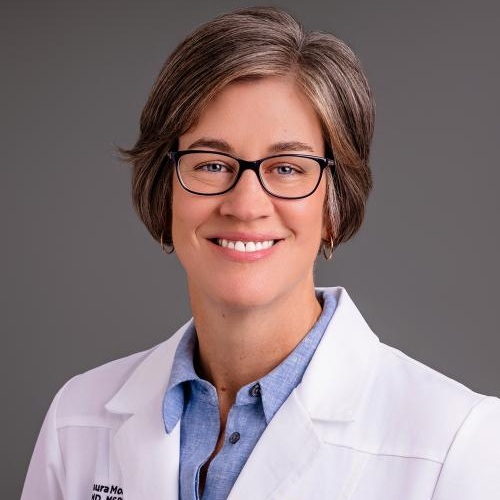
About Dr. Morris
Laura Morris, MD, MSPH, FAAFP, is a professor at the University of Missouri School of Medicine and Chief Medical Officer at MU Health Care. She is also an AAFP Vaccine Science Fellow.
ADVERTISEMENT
ADVERTISEMENT
Related Articles