




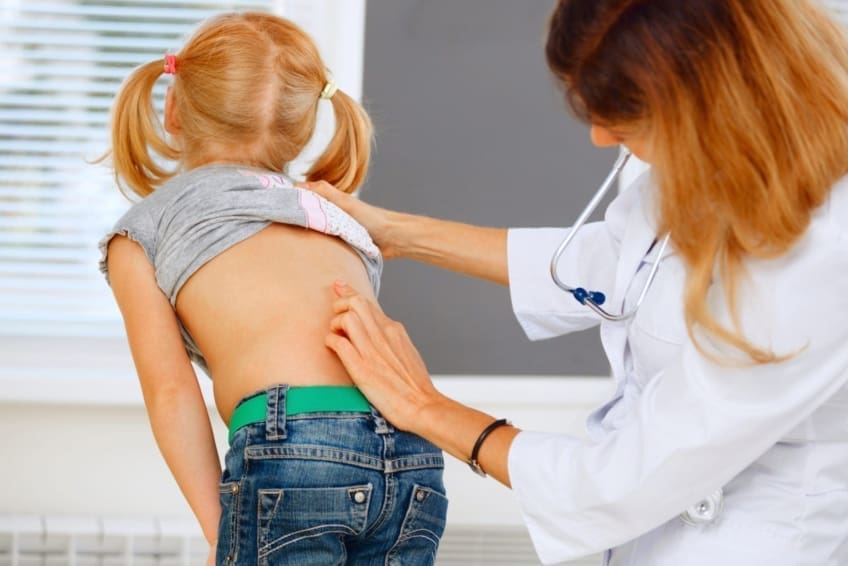
What is scoliosis?
Scoliosis is an abnormal curve of the spine (backbone). Normally, the spine is straight. With scoliosis, the spine is crooked and curves to the side. The curve can be C-shaped or S-shaped. Scoliosis is more common in girls than in boys.
Symptoms of scoliosis
Scoliosis may begin in childhood but often is not noticed until the teenage years. Key signs are having uneven shoulders and leaning to one side. If your spine is very crooked, your ribs or hips may stick out to the side as well. People who have scoliosis may have back pain and have it more often than people who don’t have scoliosis.
What causes scoliosis?
The exact cause of scoliosis is unknown. It can run in families. It can be caused by an injury, disease, infection, or birth defect. It also can be caused or worsened by repeated use of one side more than the other, such as in a certain motion or activity.
How is scoliosis diagnosed?
Contact your doctor if you have back pain or other signs of scoliosis. Your doctor will do a physical exam and review your health and family history. If your doctor is concerned about the curve, they likely will order an X-ray to get a better view of the spine.
Your family doctor may check for scoliosis at regular check-ups. Some schools screen children for the condition.
Can scoliosis be prevented or avoided?
You cannot prevent or avoid scoliosis.
Scoliosis treatment
Mild cases of scoliosis do not require treatment. Your doctor may want to monitor your condition to see if it gets worse. The curve of the spine may be temporary or permanent. It often can improve with time, especially for children as they grow.
Your doctor may have you wear a brace. This keeps the spine from curving more. Newer braces are light and less bulky than old braces. Most braces fit under clothes and are not visible.
People who have severe scoliosis may need surgery. The surgeon will move the bones in your spine, fuse them together to strengthen the spine, or place a rod in your spine to help straighten it. Talk to your doctor about the benefits and risks of surgery. These will depend on your age, state of health, and amount of curve.
Living with scoliosis
For most people, the curve in their spine is so small that it causes no problems. Treatment can improve or manage the condition. In rare cases, the curve may restrict the amount of space available for your lungs and heart to work.
Questions to ask your doctor
- How severe is the curve of my spine?
- Is my scoliosis temporary or permanent?
- Will I need to wear a brace or have surgery?
- What are the benefits and risks of surgery?
- Is physical therapy an option?
- Is it safe to exercise?
- Are there any lifestyle changes I can make to help straighten my spine?
- Will scoliosis cause any long-term health problems?

Copyright © American Academy of Family Physicians
This information provides a general overview and may not apply to everyone. Talk to your family doctor to find out if this information applies to you and to get more information on this subject.