



What is premenstrual dysphoric disorder (PMDD)?
PMDD is a severe form of premenstrual syndrome, or PMS. PMS is a common problem for women who have menstrual periods. About 75% of women of childbearing age have some PMS problems. About 2% to 10% of women in this age group have PMDD.
Symptoms of PMDD
Many women may wonder if they have PMS or if it is PMDD because the symptoms are similar. The symptoms for both begin about 10-14 days before your period. But the symptoms of PMDD are more extreme and can spill over into other areas of your life. You may feel they are uncontrollable.
The symptoms of PMS and PMDD are:
- Sadness and crying
- Feeling nervous or anxious
- Anger or irritability
- Strong cravings for certain foods
- Problems paying attention and concentrating
- Fatigue
- Physical problems such as breast tenderness, headaches, joint or muscle pain, and swelling or bloating
- Trouble sleeping
It is largely the emotional symptoms that are more severe when you have PMDD. You may have more severe depression symptoms, irritability, and tension, according to the National Institutes of Health (NIH).
These symptoms can affect your relationships and ability to do your job. If you have some of these symptoms a few weeks before your period and they improve when your period starts, you may have PMDD.
What causes PMDD?
The exact cause of PMDD is not known. Changes in hormones related to your period may cause PMDD.
How is PMDD diagnosed?
Your doctor will check your symptoms and the way they relate to your menstrual cycle. You might fill out a symptom chart for several weeks. There is no test that can diagnose PMDD.
To help diagnose PMDD, your family doctor may ask you to chart your symptoms (see sample chart below).
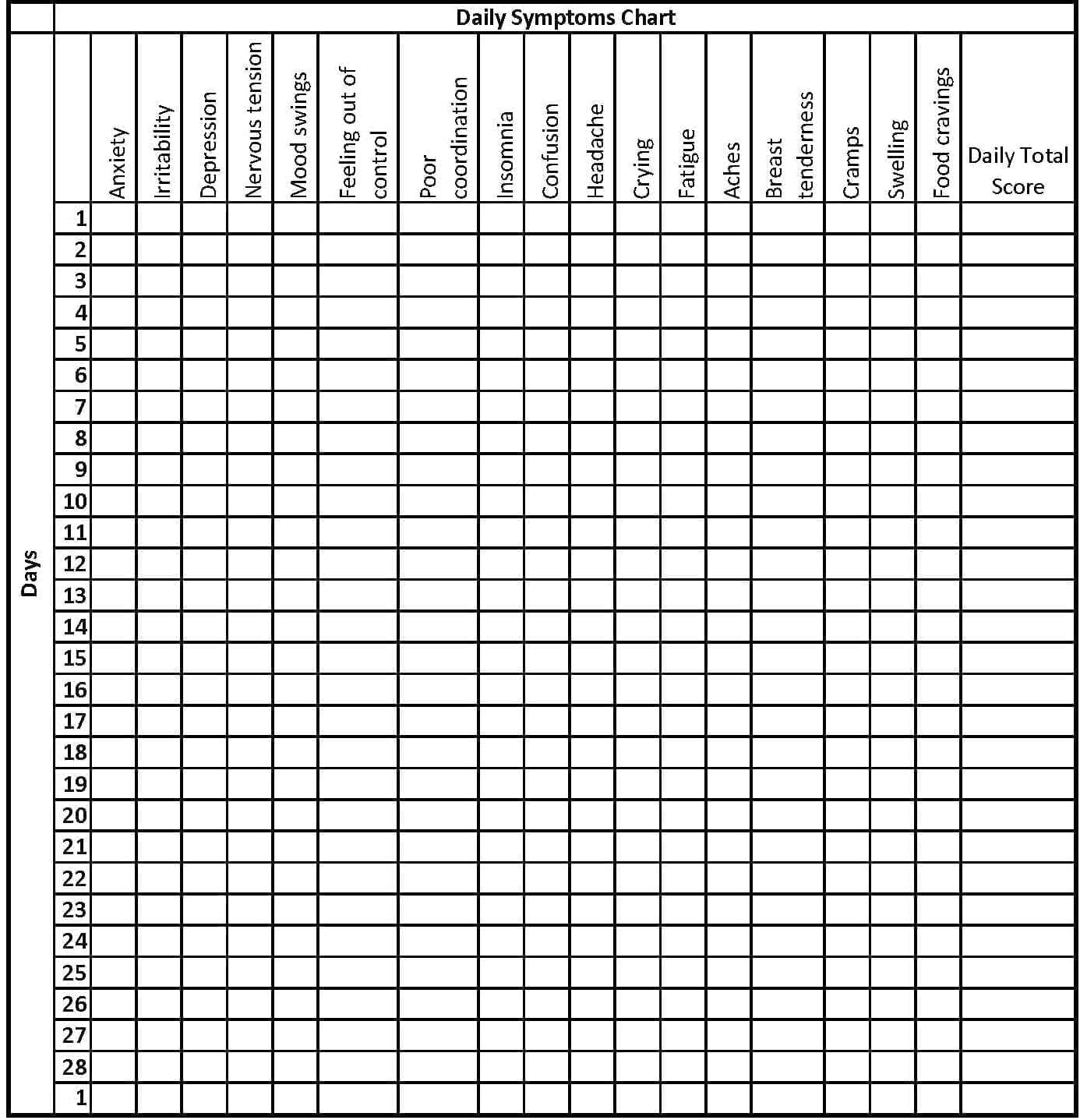
Daily Symptom Report
Severity scoring for each symptom:
0 = No symptom
1= Minimal or slightly apparent to you
2 = Moderate, awareness of symptom but does not affect your daily routine
3 = A lot, continuously bothered by the symptom and/or symptoms interferes with your daily routine
4 = Severe, symptom is overwhelming and/or unable to carry out your daily routine
Day 1 is first day of menses
Adapted with permission from Freeman EW, DeRubeis RJ, Rickels K. Reliability and validity of a daily diary for premenstrual syndrome. Psychiatry Res 1996; 65:97-106.
Can PMDD be prevented or avoided?
Stressful life events and a family history of PMS or PMDD may increase your chances of getting PMDD. Major depression is common in women who have PMDD. However, not all women who have PMDD have major depression.
PMDD treatment
Your doctor will ask you about your symptoms and will discuss different treatments with you. For mild to moderate symptoms, your doctor may suggest changes in your diet and lifestyle. You might talk to a counselor about your PMDD symptoms and life stresses. Medicines may help with severe symptoms.
Diet and lifestyle tips:
- Eat healthy foods with whole grains, vegetables, fruit, and little or no salt, sugar, alcohol, and caffeine.
- Get regular aerobic exercise throughout the month to reduce the severity of PMS symptoms.
- If you have problems sleeping, try changing your sleep habits before taking medicines for insomnia.
As you incorporate these changes into your life, keep a diary or calendar to record the type of symptoms you are having, how severe they are, and how long they last.
Medicine
- Some prescription antidepressants may be helpful. The most common is an antidepressant known as a selective serotonin-reuptake inhibitor (SSRI). You can take SSRIs in the second part of your cycle up until your period starts. You may also take it the whole month. Talk to your doctor about your options.
- Birth control pills. These typically help reduce PMS symptoms. Continuous dosing types (ones containing medication without any non-medication days) are the most effective, especially those that contain the hormone, drospirenone. With continuous dosing, you may not get a period.
- This medicine reduces water retention, which often occurs during the menstrual cycle and can cause pain and discomfort.
- Depo-Lupron. This prescription medicine suppresses the ovaries and ovulation and mimics menopause. This means you will not have a period while you are taking the medicine.
- Over-the-counter pain medicines, such as aspirin or ibuprofen. However, if you are young and regularly takin ibuprofen for the relief of PMS, talk to your doctor about the long-term damage that can occur to your kidneys.
- Nutritional supplements, such as vitamin B6, calcium, and magnesium are not helpful in relieving symptoms.
Cognitive behavioral therapy (CBT) may be used either with or instead of antidepressants. During CBT, you have about 10 visits with a mental health professional over several weeks to months.
Living with PMDD
Trying to cope with the severe symptoms of PMDD without treatment can make you miserable. It can also make those around you miserable.
Do not feel as though it is up to you to manage PMDD by yourself. Your symptoms are real, and you are not alone. If you believe you have PMDD, the best thing you can do is talk to your doctor.
Questions to ask your doctor
- Do I have PMDD or PMS?
- What is the difference between PMDD and PMS?
- What treatment is best for me?
- Will I have to take medicine until menopause?
- Could I also have depression?
- What are the side effects of my medicine?
- How long will I have to take my medicine?
- Is there anything I can do at home to help myself?
Resources
National Institutes of Health, MedlinePlus: Premenstrual dysphoric disorder

Copyright © American Academy of Family Physicians
This information provides a general overview and may not apply to everyone. Talk to your family doctor to find out if this information applies to you and to get more information on this subject.